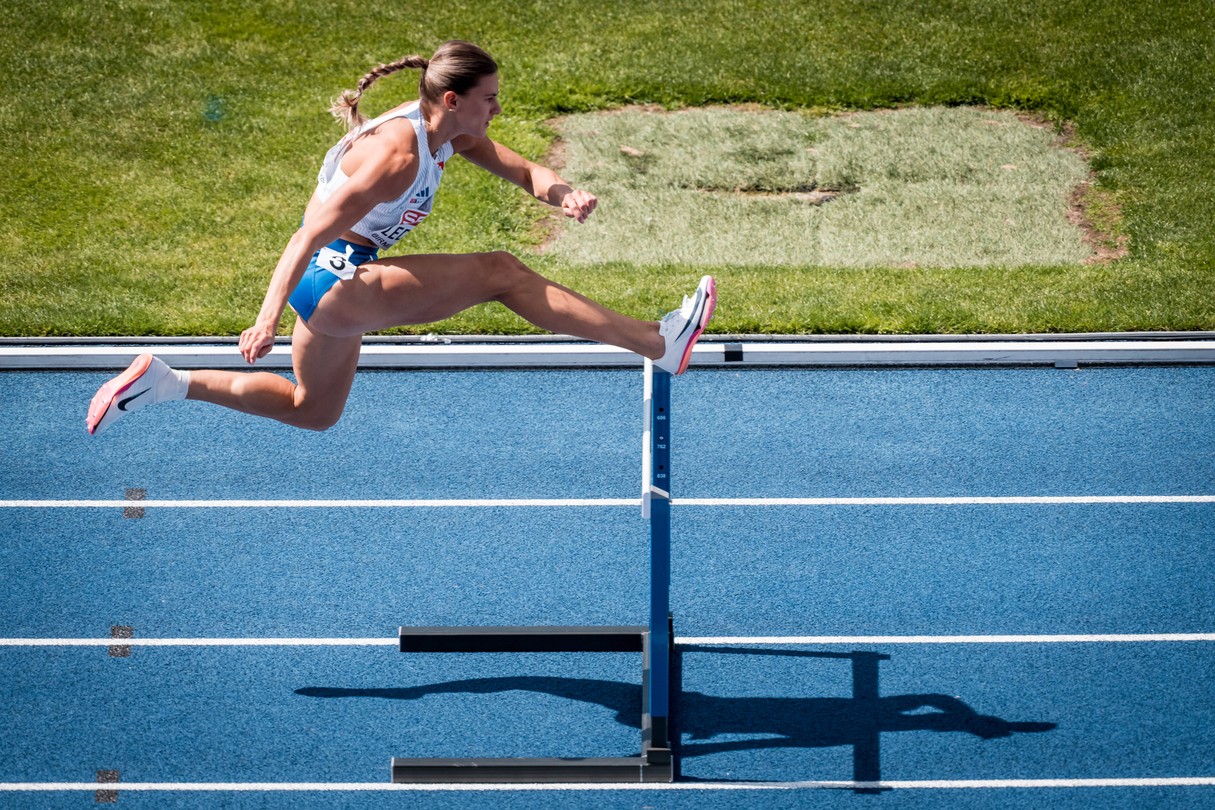
As the European Athletics Championships begin in Birmingham, new broadcasting guidelines aim to prevent the sexualisation of women athletes and put sporting performance at the centre of how they are shown on screen, responding to concerns athletes themselves have raised for years.
The 2026 European Athletics Championships get underway in Birmingham today, bringing together many of the continent’s leading athletes for seven days of competition from 10 to 16 August.
This year’s championships will also mark an important development in how women athletes are portrayed on screen. The European Broadcasting Union (EBU), in collaboration with European Athletics, has developed Raising the Bar: Guidelines for Respectful Media Coverage in Women’s Athletics, a set of practical recommendations designed to address the sexualisation and objectification of women athletes in sports broadcasting.
You can read the full Raising the Bar guidelines here.
The guidelines respond to concerns that athletes themselves have repeatedly raised about the way their bodies are captured and presented during competition. The guidance also draws on direct input from athletes, including Holly Bradshaw, Ivana Španović and Blanka Vlašić. The EBU acknowledges that women athletes have consistently spoken out against practices including lingering shots on athletes’ bodies, low camera angles and excessive slow-motion replays that provide little technical or editorial value.
Putting sporting performance back at the centre
Rather than prescribing a single way to cover athletics, the guidelines provide broadcasters, directors and camera operators with practical alternatives that can both protect athletes’ dignity and improve audiences’ understanding of their performance.
Among its recommendations, broadcasters are encouraged to:
- avoid low or tightly framed camera angles that unnecessarily focus on athletes’ bodies;
- limit slow-motion replays when they offer no meaningful technical or storytelling value;
- use wider shots that show elements such as the run-up, take-off and landing in jumping events;
- avoid particularly tight shots during vulnerable moments, including athletes’ final preparations at the starting line or moments of exhaustion after a race;
- use slow motion, alternative angles and graphics to explain technique, biomechanics and the physical demands of competition.
The principle running through the guidance is that respectful coverage does not require sacrificing compelling sports broadcasting. In many cases, the camera angles that best demonstrate athletes’ power, precision and technique are also those that portray them with dignity.
World Players welcomes the new guidelines as a positive example of how sport can improve when athletes’ experiences and concerns are taken seriously. While much more remains to be done to ensure athletes have a meaningful and formal voice in decisions that affect them, listening to athletes and responding to the issues they raise is an important step towards building a sporting environment that respects their dignity and their work.
Photo credit: IMAGO / CTK Photo
 Related news