World Players contributed to discussions on labour rights, athlete representation, and the implementation of the ILO Guidelines on Decent Work in Sport during the FIFPRO Africa General Assembly.
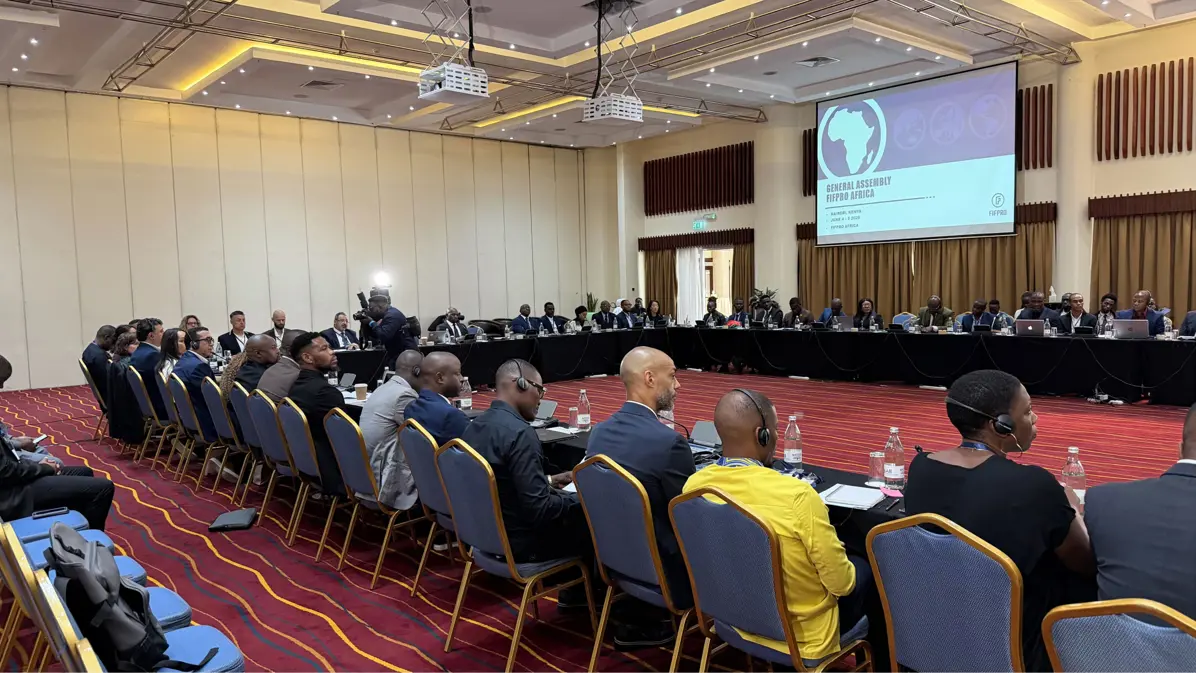
Player representatives from 30 countries gathered in Nairobi, Kenya, for the FIFPRO Africa General Assembly, one of the most representative meetings in the organisation’s history and a reflection of the growing strength of Africa’s player voice.
The assembly brought together player unions and representatives from across the continent to discuss the challenges facing professional footballers and the opportunities for strengthening athlete representation at national, regional, and international levels.
World Players contributed to the discussions through the virtual participation of Matthew Graham, Head of UNI World Players. During the assembly, Graham presented the International Labour Organization’s (ILO) Guidelines on Decent Work in Sport, outlining their significance for athletes, unions, employers, governments, and sporting bodies around the world.
Adopted in 2025, the ILO Guidelines provide the first internationally recognised framework for promoting decent work in sport. They establish principles aimed at protecting athlete rights, improving working conditions, supporting social dialogue, and ensuring that athletes are able to exercise the same fundamental labour rights afforded to other workers.
The gathering also highlighted the continued growth of organised player representation across Africa. With delegates representing 30 countries, the assembly demonstrated both the diversity of the continent’s football landscape and a shared commitment to ensuring that players have a meaningful voice in decisions that affect their careers and working lives.
For World Players, the conversations reinforced the importance of building strong and independent athlete organisations capable of representing their members effectively. The adoption of the ILO Guidelines has created an important opportunity to advance labour standards in sport regionally, but meaningful progress will depend on collaboration between athletes, unions, employers, governments, and governing bodies.
 Related news