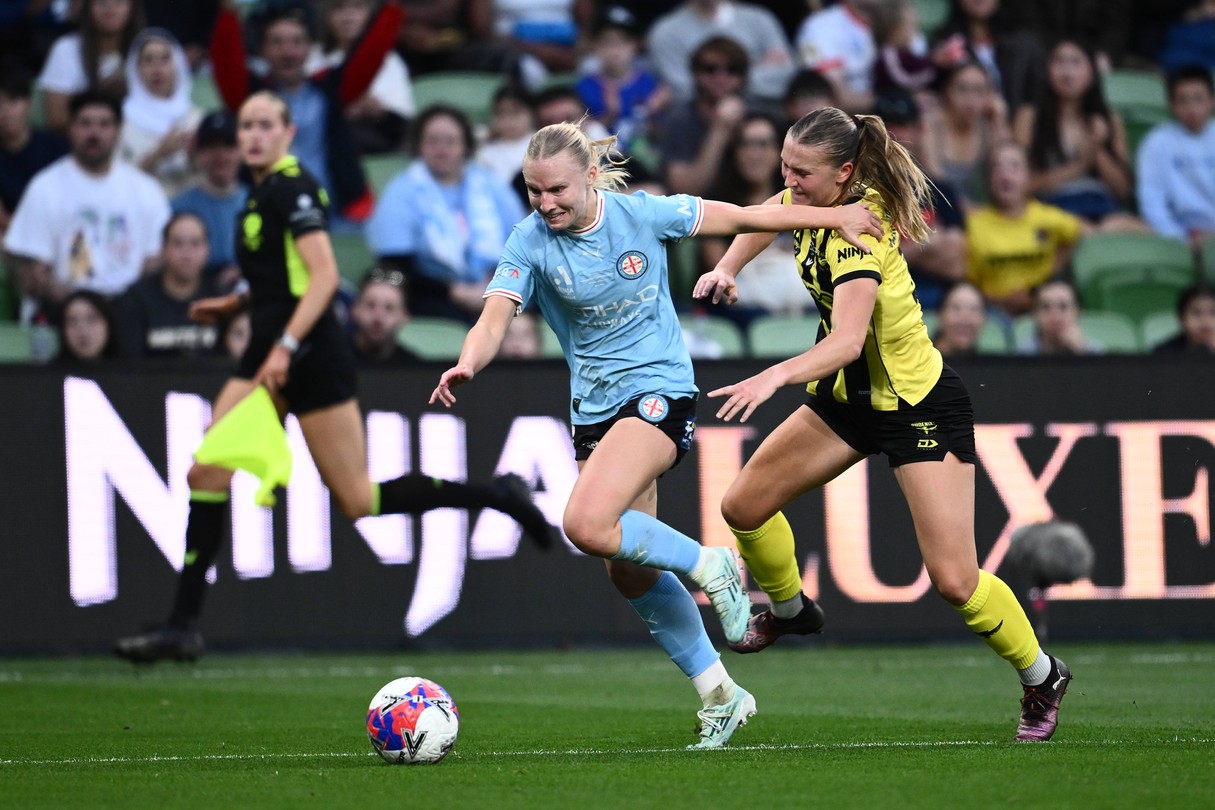
A-League Women players are calling for greater investment and progress towards full-time professionalism as leading players continue to pursue opportunities overseas, highlighting both the challenges facing the domestic competition and its significant potential for growth.
A-League Women players are raising concerns about the future of Australia’s top domestic women’s football competition, as another wave of players leave the league for opportunities overseas ahead of the 2026–27 season.
Former Adelaide United captain Dylan Holmes, a long-standing player delegate and executive committee member of Professional Footballers Australia (PFA), said to told The Far Post Podcast that players are increasingly frustrated by the pace of progress towards a fully professional competition, particularly as women’s football leagues around the world continue to grow.
The trend comes five years after a previous generation of leading Australian players, including Sam Kerr, Caitlin Foord, Ellie Carpenter, Steph Catley, Mackenzie Arnold and Alanna Kennedy, moved overseas in search of full-time professional opportunities.
The latest PFA player survey illustrates the pressures behind the trend. Three-quarters of A-League Women players reported feeling either “not at all” or only “slightly” financially secure, while two in five said they did not believe the competition enabled them to develop to their full potential. One-third also said they did not believe their clubs wanted a women’s team.
For Holmes, the recent collective bargaining negotiations reinforced concerns about the gap between players’ ambitions for the competition and its current trajectory. Having played in the A-League Women since 2014, she had hoped to see full-time, 12-month contracts introduced during her career in Australia.
But players have also put forward a detailed vision for what the league could become. Through Ready for Takeoff, PFA Australia has developed a player-driven roadmap for a thriving, sustainable and globally competitive A-League Women. Its recommendations include full-time professionalism, stronger governance and club standards, greater investment, improved infrastructure and a football economy capable of supporting the long-term growth of the competition.
For World Players, the situation in Australia underscores why players must have a meaningful voice in decisions about the future of their sport. Sustainable growth in women’s sport depends on working with players and their unions to turn the sport’s growing audience, commercial potential and talent into better and more sustainable careers.
Photo credit: IMAGO / AAP
 Related news